-
E-mail : info@sparktechclean.com


E-mail : info@sparktechclean.com
Supermarkets are public spaces with high foot traffic and quickly soiled floors. Floor cleanliness directly affects customers’ shopping experience and the store’s overall image and hygiene standards. Traditional manual mopping is inefficient and ineffective, making it hard to meet the cleaning demands of modern supermarkets. As a result, more and more supermarkets are introducing industrial floor scrubbers. But with so many models on the market, how should a supermarket choose the right one? Based on real-world supermarket scenarios, this article explains the best types of industrial scrubbers for supermarket use.
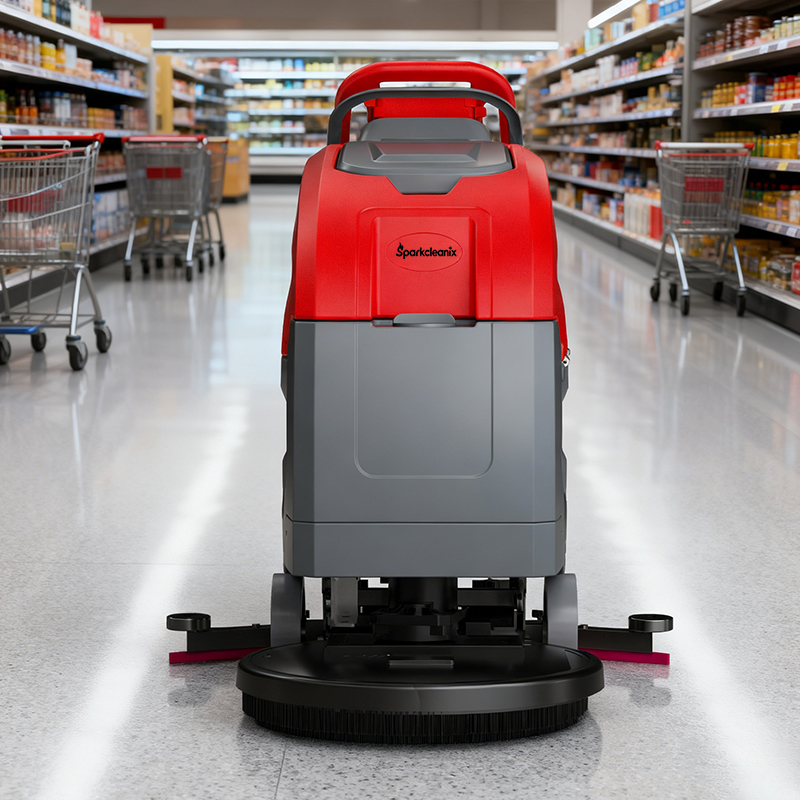
Before choosing a scrubber, it’s important to understand the unique cleaning requirements of a supermarket:
Long operating hours – Most supermarkets are open 12+ hours a day, some 24/7. Cleaning must be efficient and minimally disruptive to operations.
High foot traffic – Constant customer movement leaves footprints, stains, and moisture. Cleaning must be done while avoiding interference with shoppers.
Varied floor surfaces – Common flooring includes tiles, epoxy flooring, or hardened concrete. Different brush types and pressure levels are required.
Considering the actual conditions of supermarkets, the following industrial scrubbers are most suitable:
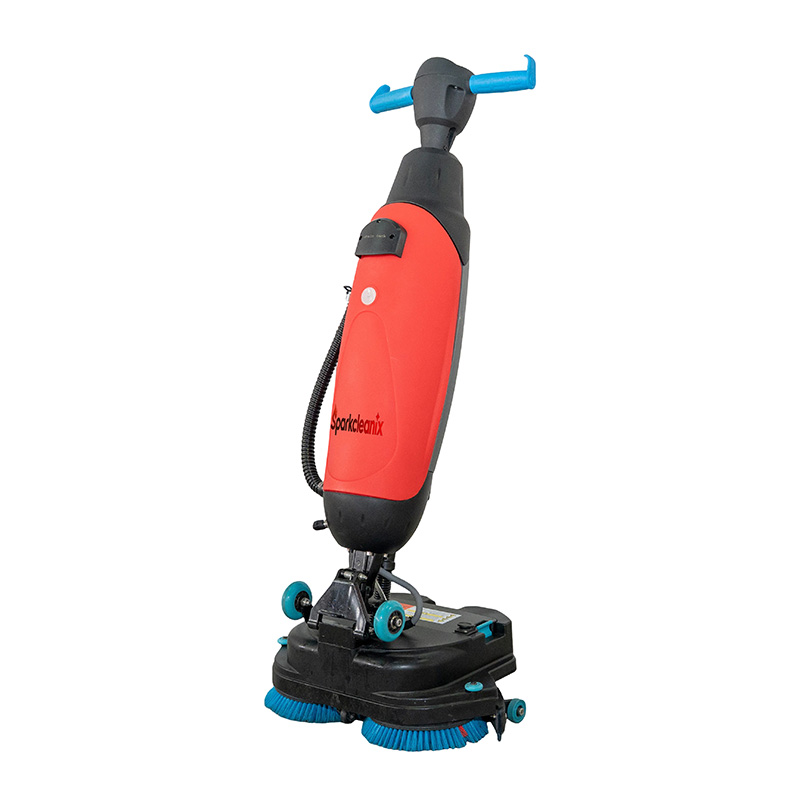
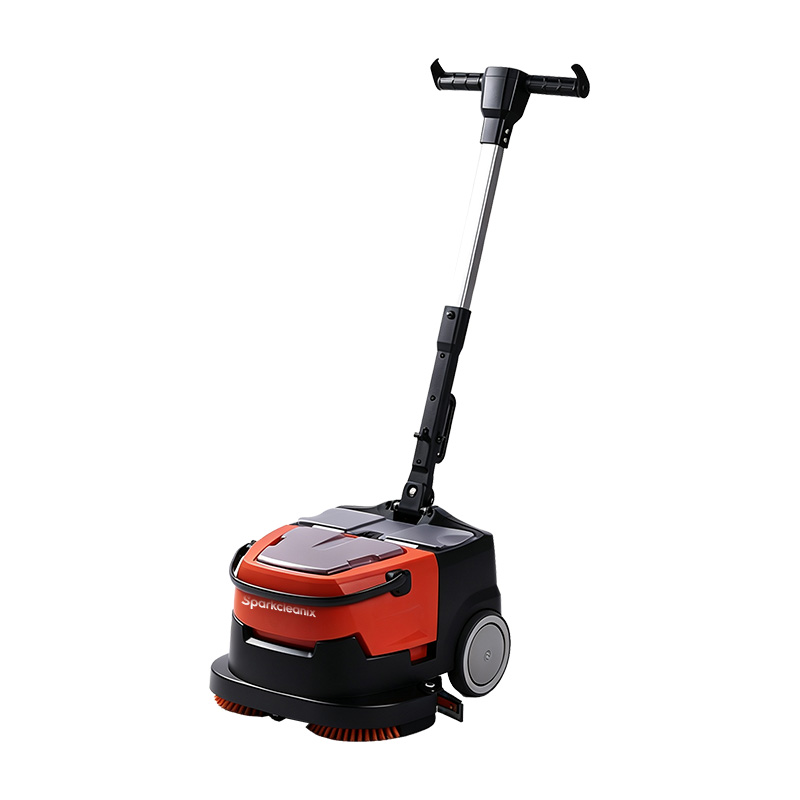
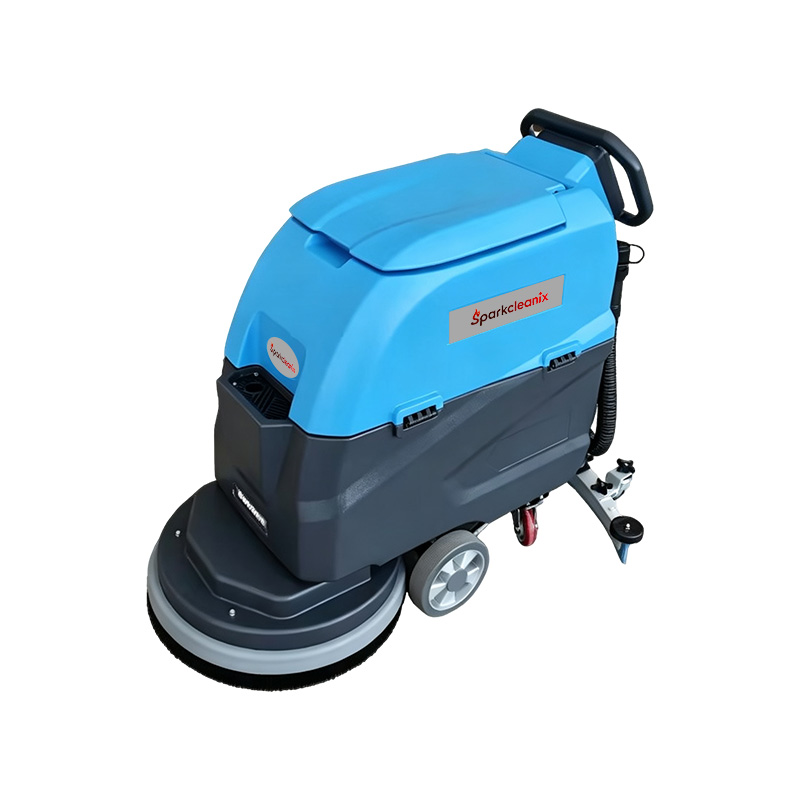
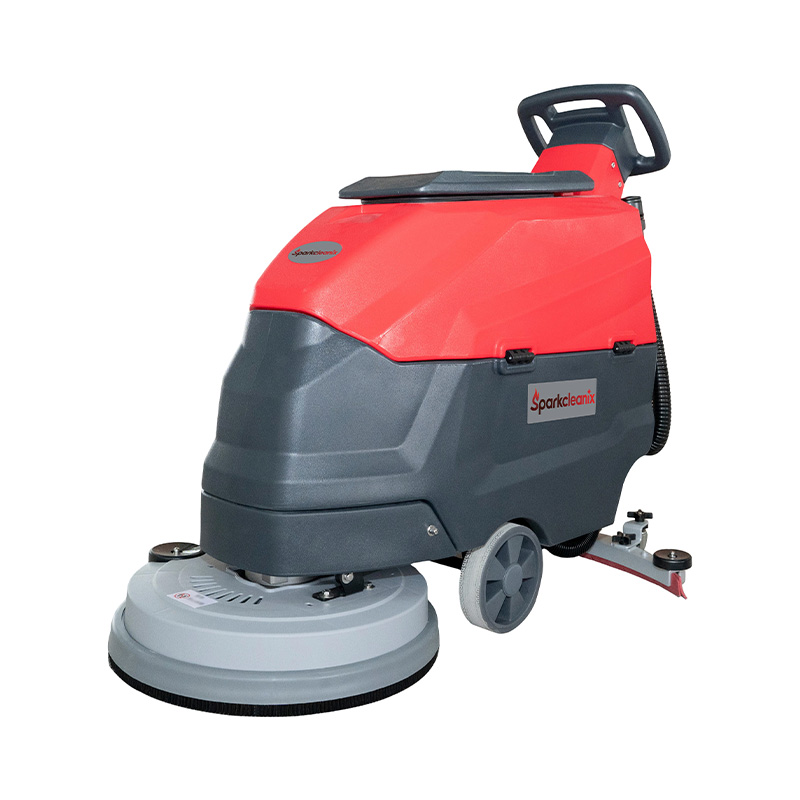
For supermarkets of 1,000–3,000 m², a walk-behind scrubber is the most economical and practical choice.
Advantages: Lower price, flexible operation, easy to maneuver between aisles. Cleaning width typically 500–800 mm, suitable for narrow passages.
Recommended model: Battery-powered walk-behind scrubber with 2–4 hours of runtime. Cleaning efficiency up to ~2,000 m²/hour.
Application areas: Fresh produce aisles, snack aisles, daily goods aisles, etc.
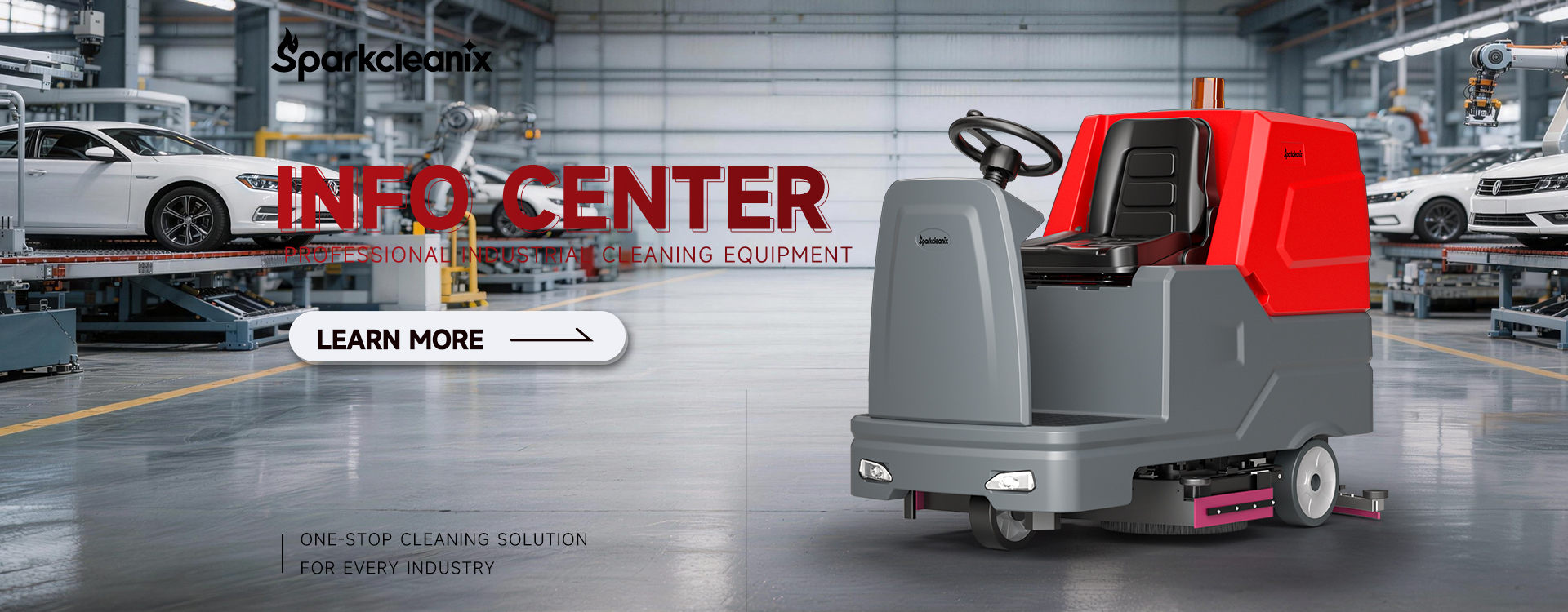
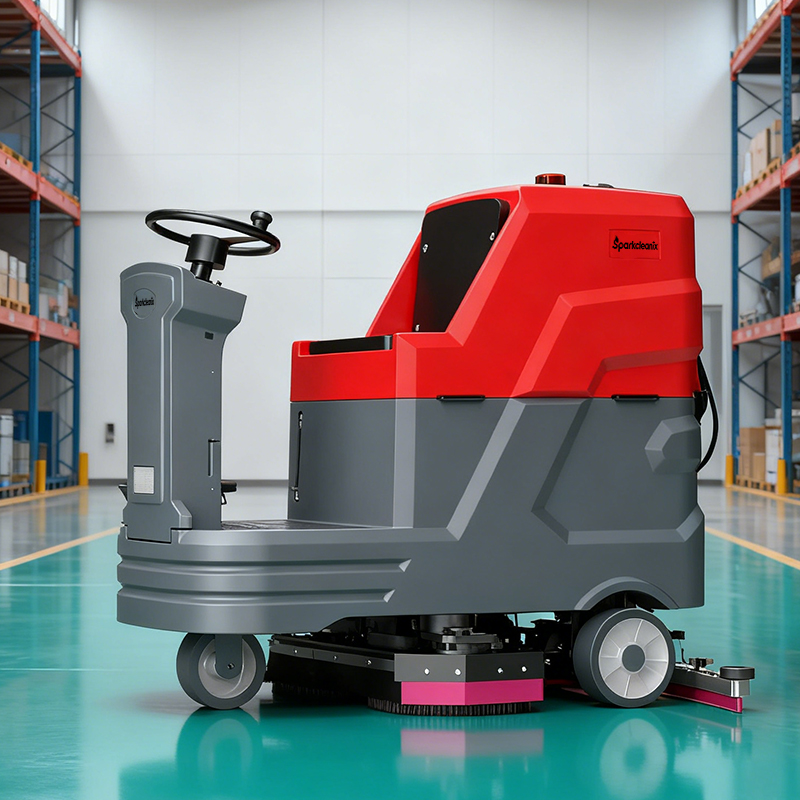
For supermarkets over 5,000 m² or warehouse-style stores (e.g., Costco, Sam’s Club), ride-on scrubbers greatly improve cleaning efficiency.
Advantages: High efficiency – 5,000–8,000 m²/hour; comfortable operation reducing worker fatigue; larger tanks reduce refill frequency.
Recommended model: Compact ride-on scrubber (width 800–900 mm) to avoid being too wide for some aisles.
Application areas: Main aisles, open areas near checkouts, warehouse/storage areas.
| Parameter | Recommended value | Reason |
|---|---|---|
| Cleaning width | Walk-behind: 600–750 mm Ride-on: 800–900 mm |
Balances efficiency and maneuverability. Supermarket aisles are typically 1.2–1.5 m wide. |
| Tank capacity | Solution tank ≥40 L Recovery tank ≥45 L |
Reduces frequent refilling, improves continuous operation. |
| Battery runtime | ≥4 hours | Supports half a day of continuous cleaning. |
| Noise level | Below 68 dB | Does not disturb shoppers or staff. |
| Brush pressure | 30–50 kg (adjustable) | Suits different floors (tiles, epoxy, concrete). |
Avoid peak hours – Clean before store opening, during mid-day lulls, or after closing to minimise disruption.
Zone cleaning – Divide the supermarket into zones and deep-clean different areas each day to maintain overall floor cleanliness.
Special care for fresh areas – Fresh produce/food sections often have oil or blood stains. Use appropriate cleaning agents and increase cleaning frequency.
Regular maintenance – Clean brushes and squeegee blades promptly. Regularly check batteries and motors to extend equipment life.
For most ordinary supermarkets, a battery-powered walk-behind scrubber offers the best value for money, balancing cleaning results, maneuverability, and cost. For large hypermarkets or warehouse stores, a compact ride-on scrubber is recommended to boost efficiency. If produce areas frequently generate debris, consider adding a sweeper-scrubber combo specifically for those zones.
Regardless of the type, the core principle is to choose based on the supermarket’s actual floor area, aisle width, floor type, and budget. Avoid blindly pursuing high-end features or buying an unsuitable machine just to save money. A properly selected scrubber not only greatly improves floor cleanliness but can also save the equivalent of 2–3 cleaning staff, with the equipment cost typically recovered within half a year to one year.

Tel : +86-19105657103
Email : info@sparktechclean.com