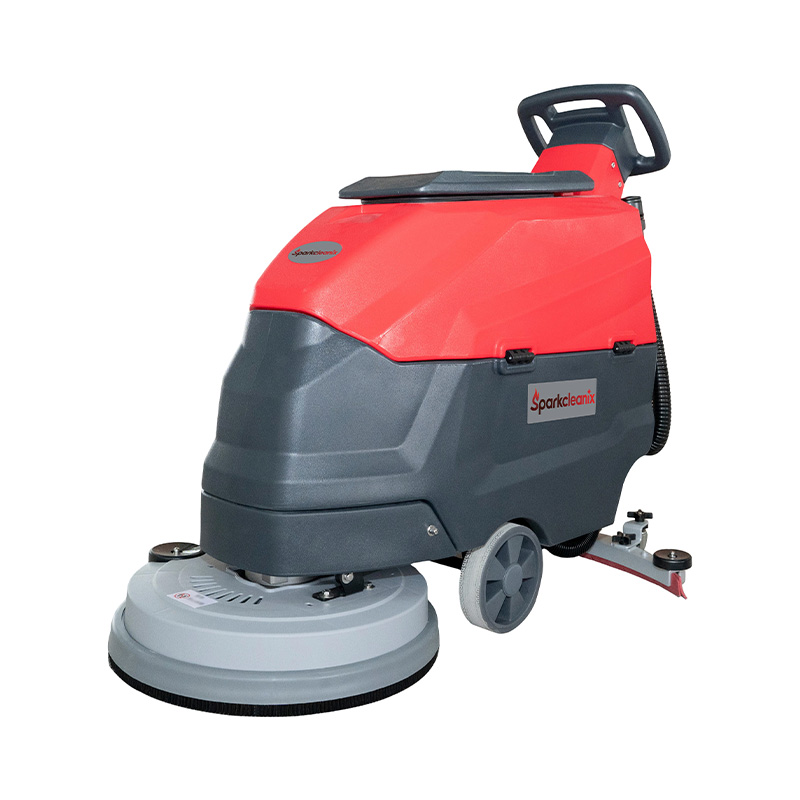
-
E-mail : info@sparktechclean.com


E-mail : info@sparktechclean.com
In modern factories, distribution centres, large workshops and other industrial environments, floor cleaning is no longer a simple job of “broom and mop”. Production safety, quality control and environmental compliance all demand high cleanliness standards. Battery‑powered industrial sweepers and scrubbers, with the flexibility and performance that cordless design brings, are rapidly becoming the preferred cleaning solution for many industrial operations. Below we outline the seven core advantages of battery‑driven equipment.
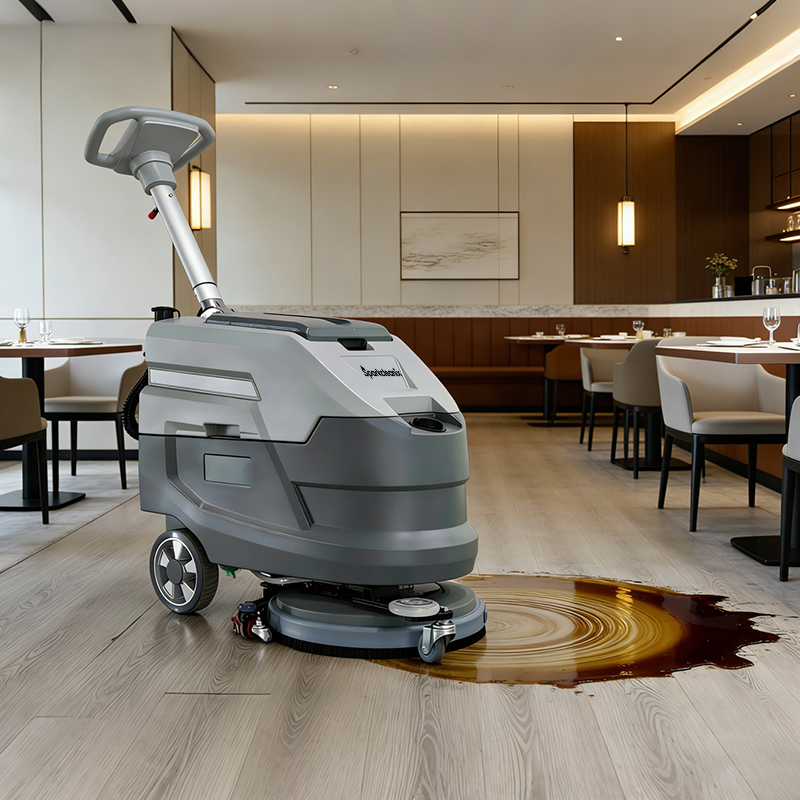
Industrial plants are often tens of thousands of square metres in size, with complex layouts that include production lines, racks, equipment and aisles. The biggest drawback of traditional corded cleaning machines is that they are tied to a power outlet – every time you move to a new area you have to unplug, drag the cable, and risk running over or snagging the cord on machine bases. This not only reduces efficiency but also creates a trip hazard.
Battery‑powered sweepers and scrubbers need no external power cord. Operators can push or ride the machine freely into any corner of the plant, including central areas far from wall sockets, narrow aisles, and gaps between racks. Whether it is a large 10,000 m² workshop or a logistics warehouse requiring frequent cross‑zone cleaning, a single charge allows complete coverage – truly “clean wherever you want”.
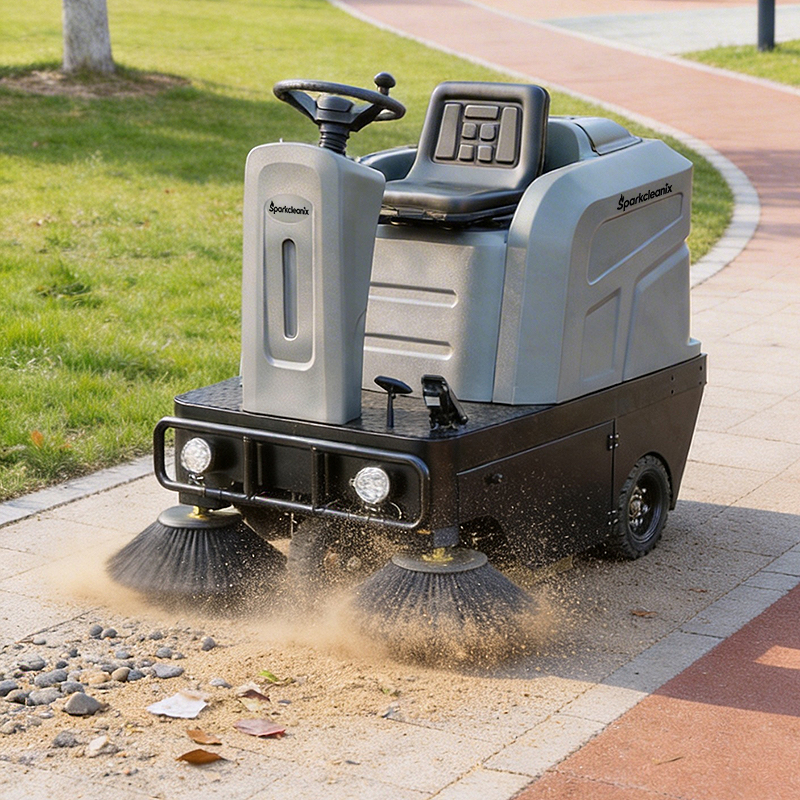
Industrial cleaning often requires several hours of continuous operation, sometimes covering an entire shift. Modern high‑capacity batteries give these machines robust runtime – mainstream industrial battery‑powered sweepers/scrubbers can work for 4‑8 hours on a full charge, and heavy‑duty models can exceed 10 hours, enough for a full day shift or even split‑shift cleaning.
There is no need to stop for a power outlet change or cable replacement. The machine can clean the entire factory floor in one go. For quick top‑ups during lunch breaks or shift changes, batteries support fast charging – 1‑2 hours can restore 70‑80% of the charge, so the machine is ready again in the afternoon.
Industrial floors are rarely uniform. There are slopes, thresholds, drainage covers, and protruding equipment foundations. With a corded machine, the trailing cable often gets caught on these obstacles or sucked into the brush deck, forcing the operator to stop frequently.
Battery‑powered machines have no external cables. Their low centre of gravity and flexible wheel designs allow them to easily cross small slopes and obstacles. Ride‑on models have a tight turning radius, while walk‑behind models are light and easy to steer, able to turn around in narrow aisles between production lines. In food processing plants or pharmaceutical workshops where floors are frequently washed, cordless machines can be moved away from wet areas instantly, eliminating the risk of electric shock from a wet cord.
Every time you use a corded machine, there is a ritual: find an extension cord of the right length, run it to the work area, check that the socket capacity is sufficient, plug in, and tidy the cord to avoid running it over. These small tasks can waste 15‑30 minutes each day, and the same process repeats for every shift or every new area.
Battery‑powered machines do away with all that “pre‑work”. The operator simply presses the start button and the machine is immediately ready. After finishing, there is no cable to wind up – just drive or push it back to the charging station and plug in the charger. This is especially valuable for emergency cleaning (spilled materials, oil leaks): from the moment a spill is noticed to the start of cleaning can be less than ten seconds.
Industrial plants already have noise from machinery, material handling, and other sources. Traditional high‑power corded cleaning equipment (especially industrial vacuums and scrubbers) often operates at over 80 dB, pushing the overall noise level even higher, putting a strain on operators’ hearing and interfering with on‑site communication.
Battery‑powered industrial cleaners typically use efficient brushless motors and optimised airflow designs. They achieve the same cleaning performance at 65‑75 dB – roughly the level of normal conversation or a slightly loud air conditioner. This allows floor cleaning to be carried out without stopping production or disturbing workers’ communication. For electronics assembly lines, precision workshops and other noise‑sensitive areas, this lower noise level is an essential requirement.
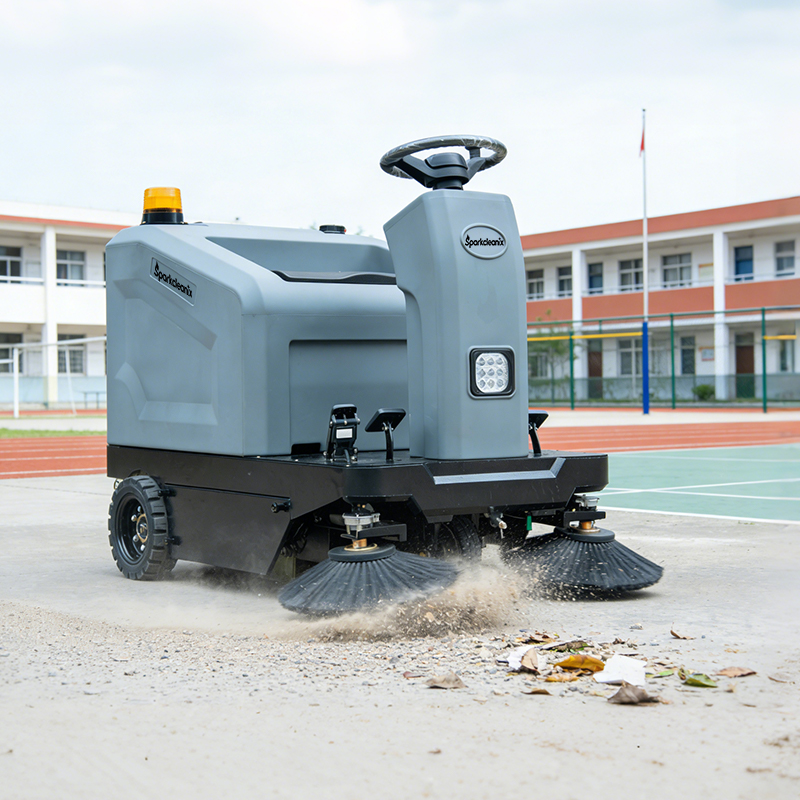
The bottom line of factory safety management is “zero accidents”. Corded cleaning machines carry several inherent risks:
Trip hazard – power cords lying on the floor can trip passers‑by, especially during night shifts or in busy material‑handling areas.
Cord crush and damage – when the machine’s own wheels or forklifts run over the cord, the insulation can be damaged, leading to electric shock, short circuits or fire.
Shock risk in wet conditions – in food plants, washdown areas or freshly mopped floors, if a power cord or plug becomes wet, the consequences can be serious if the residual‑current device fails.
Battery‑powered machines have none of these issues – no exposed cables, no plugs, no sockets. They physically eliminate all cord‑related safety hazards. The whole machine runs on low‑voltage DC power, so even if the machine is used on wet floors or an operator touches it with wet hands, there is no risk of electric shock. For explosive environments such as chemical plants or dust‑heavy workshops, specially designed battery machines can meet explosion‑proof standards through intrinsically safe design.
The mobility, continuous runtime and instant start features of battery‑powered equipment ultimately translate into real labour savings and efficiency gains. One ride‑on battery‑powered scrubber, operated by a single person, can clean 3,000‑5,000 m² per hour – equivalent to the workload of 6‑8 workers using traditional tools. Moreover, the operator no longer has to manage power cords or constantly switch outlets, allowing full focus on cleaning quality.
For large plants, using a combination of battery‑powered sweepers (for dry debris) and scrubbers (for wet cleaning) enables shift‑based “machine always on, people take turns” operation, drastically reducing total cleaning hours. After adopting battery‑powered industrial cleaning equipment, many companies have reduced their cleaning teams by 40‑60% while raising floor cleanliness compliance rates to over 99%.

Tel : +86-19105657103
Email : info@sparktechclean.com